 Skip to main content


When Birds and Glass Collide
Each migration season, millions of birds die in cities by crashing into buildings. Now a growing trend toward sustainable design could open the door to safer passage.

Annette Prince sidles along the exterior stretch of lobby windows that line a downtown Chicago office building, eyeing a tawny speck on the ground. Suddenly the speck—actually it’s a type of warbler called an ovenbird—lifts off on tiny wings, veering directly into the sheet of glass behind it. Prince makes one artful leap and gently pins the bird against the window with a small green net. Drawing it down to eye level, Prince inspects her new ward before carefully lowering it into a brown paper lunch bag on which she places a sticker with the location, species, and time of capture. “This little guy, he was pretty able-bodied as he moved around,” says Prince. But she errs on the side of caution, deciding to remove the ovenbird from the city for release somewhere safer later on.
At half-past six on this overcast morning in early May, the ovenbird’s rescue is a bright spot during a hunt punctuated by gloomier encounters. Just minutes before, Prince had scooped up a lifeless wood thrush lying in the street near the curved glass entryway of a building on the corner of Monroe and Dearborn streets. The splotch of bloody, matted feathers above its eye suggested a fatal concussion. Still earlier, around dawn, Prince had discovered a common yellowthroat next to another expanse of windows at an office building near Lake Michigan. Although motionless, the bird was still warm.
Prince has seen more than her share of avian carnage. As director of the Chicago Bird Collision Monitors, a group affiliated with Chicago Audubon, she directs a force of more than 80 volunteers who patrol the city streets during the early morning hours each spring and fall migration season, gathering victims from Chicago’s concrete canyons. Today, by morning’s end, Prince and her teammates will have rescued 17 birds and found 20 deceased, carting the living to a wildlife rehabilitation center and the rest to the Field Museum for scientific research. Prince anticipates that by the end of spring migration, she will have collected 600 injured birds and more than 700 dead ones. Those numbers, of course, don’t reflect the countless birds taken by predators, swept into the trash, or trapped out of reach.
In most cases the victims are nocturnal migrating species, such as yellow-bellied sapsuckers, northern flickers, brown creepers, hermit thrushes, and white-throated sparrows, that touch down to rest and refuel during their long journeys to wintering or breeding grounds. Urban pit stops are a mixed blessing, however. Although migrants find food and refuge in city parks and planters, the enticing vegetation, coupled with bright lights and clear glass, comprise an obstacle course that can foil even the hardiest navigators, making collisions with buildings a major cause of bird mortality. But a growing trend toward environmentally responsible building holds promise, as bird advocates, conservationists, and architects tout what they consider a vital sustainable design concept: bird safety—which, in a cruel twist, could be undermined by a building’s other environmental attributes, such as rooftop gardens and energy-efficient windows with reflective coatings. “[Architects and their clients] can use all the recycled material they want, they can save all the energy they want,” says Daniel Klem Jr., an ornithologist who has devoted his career to studying bird collisions. “But if their building is still killing birds, it’s not green to me.”
Bird strikes occur year-round and can happen at virtually any type of building—commercial, educational, or residential. But when it comes to cities that, like Chicago, lie on avian flyways, the problem is especially evident during migration season. In the evening, bright lighting on skyscrapers can lure birds in search of navigational cues typically afforded by the moon and stars. The effect is most pronounced on evenings of bad weather, when the cloud cover is low and birds are forced to fly at lower altitudes. Confused by the artificial light beams, some migrants crash into the buildings’ facades.
Most migrants, however, will settle into the city unscathed until morning, only to face a more menacing danger: glass. “It’s not, in my view, beacons that are attracting these animals to their deaths on the tops of the buildings,” says Klem, who is based at the Acopian Center for Ornithology in the Department of Biology at Muhlenberg College in Allentown, Pennsylvania. “It’s a secondary effect that gets them, and that’s the glass on the ground.”
Klem estimates that at least a billion birds—roughly five percent of the bird population after breeding season—die annually across the United States by colliding with windows, making it the second-largest manmade threat to birds after habitat loss. When confronted with a pane, most migratory species are vulnerable, because birds don’t perceive glass as a barrier. (Resident birds like pigeons seem more immune, likely because they’ve become accustomed to their environment.) In other words, glass is an indiscriminate killer, culling the healthiest members of a population as well as the weakest. To make matters worse, many of the victims are songbirds whose populations are already in decline, like the wood thrush Prince found that early May morning.
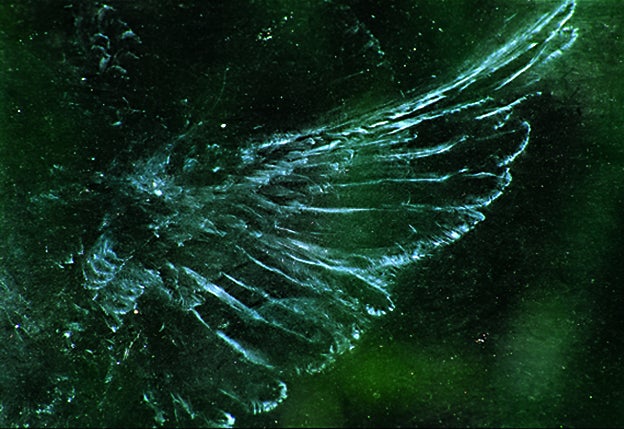
Two traits that make glass desirable as a building material—it’s reflective and transparent—are also what make it so lethal to birds. Enticed by the reflection of sky or nearby foliage in mirrorlike panes, or tricked by a transparent sheet that looks like a way to an atrium inside a building, for example, birds will fly into the windows, knocking themselves out—sometimes fatally. These are deaths made more tragic by the journey taken to get there. “In the spring the birds you’re seeing are the survivors,” says Prince. “[They] went a thousand miles south, a thousand miles north, survived it all, and then hit a window.’”
Today there are more and more buildings with all-glass facades in avian airways. “In the 1950s and ’60s all the high-rent buildings were made out of white brick,” says Bruce Fowle, principal architect at FXFowle, a New York firm that is renovating the city’s biggest bird killer, the Javits Center. “Now, in 2008, they’re all being made out of solid glass.” There’s also a widespread push toward “sustainable” buildings designed to maximize performance and minimize operating costs. Perhaps somewhat ironically, some of the attributes that make a building sustainable—such as windows that reduce the need for interior lighting, or native vegetation planted on rooftops to lock in heat or cold—could contribute to bird mortality. More windows mean more opportunities for bird strikes, and for a bird, nearby habitat is like an oasis in the middle of a minefield.
But accounting for bird safety, some advocates argue, is part and parcel of green construction. “As we look at the evolution of sustainable design solutions, it can’t just be about the passive components of the environment, like water and what happens with soil,” says Michael Bongiorno of the Columbus, Ohio–based DesignGroup, which is incorporating bird-friendly design into Audubon Ohio’s new environmental center in Columbus. “The fauna have to be part of the equation.” Convincing the design community, developers, and their clients isn’t always easy, however. Many people simply aren’t aware. Birds that hit buildings at night or during the early morning hours often go unseen, scavenged from the ground by resident predators lurking nearby such as gulls and crows, swept up by sanitation crews, or power-washed out of sight. “They’re mostly invisible to us, and we’re never really confronted with the hundreds of millions of birds a year that are killed,” says Karen Cotton, manager of the American Bird Conservancy’s new Bird Collisions Campaign. “At most we maybe hear a thump on a window every once in a while, and we feel bad, and that’s kind of the end of it.”
Nor is there any silver bullet. A seemingly ideal fix would be a type of glass that’s visible to birds but not humans. Glaswerke Arnold, a German company, advertises such a glass, called Ornilux; it has proved effective in laboratory testing, though it has not yet been subjected to field studies on the few buildings where it has been installed (one is at the Bronx Zoo). For his part, Klem isn’t entirely convinced by Ornilux’s technology, which involves coating the glass with strips that reflect and absorb ultraviolet (UV) light, a wavelength birds, but not humans, can detect. (He is currently conducting his own tests on UV light’s effectiveness.)
Motivating the glass industry to make a product no one is demanding also poses a challenge. “It’s a chicken-and-egg thing,” says Jemssy Álvarez, an engineer at Guardian Glass, one of the world’s biggest makers of fabricated glass. “I think the architectural community is saying, ‘Well, we’re not specifying this product, because it doesn’t exist,’ and here the technical community is saying, ‘We’re not building this product, because there’s no market for it.’ ” Álvarez was forced to shelve an experimental glass he produced based on some of Klem’s earlier research. “There’s actually no technical reason whatsoever why we couldn’t develop and commercialize the product,” he says. “But I don’t see any demands in the marketplace that give my leadership the assurances that they can make this investment wisely.”
Meanwhile, there are beneficial interim fixes. The City of Toronto, the City of Chicago, and New York City Audubon have published bird-friendly building guidelines that they hope architects, developers, building owners and managers, and even home-owners will adopt during new construction or renovation. Toronto’s 46-page “Bird-Friendly Development Guidelines” has a companion rating system with a checklist that outlines building strategies that take bird safety into account. Chicago intends to distribute its two-page “Bird-Safe Building” design guide to developers engaged in talks with its Department of Planning, and New York City Audubon handed out its “Bird-Safe Building Guidelines” at Green Build 2007, the premier sustainable design conference, presented by the U.S. Green Building Council (USGBC). The comprehensive, 57-page booklet offers a medley of ways to help prevent bird strikes. Some are as simple and inexpensive as drawing the blinds. Others can be more costly, such as installing fritted glass, which adds about five percent to the overall cost of a window. To make fritted glass, tight patterns, such as dots or even more complex designs, are burned onto the pane in the manner of a silk screen. Those patterns create “visual noise” that break up glass transparency to alert birds of the barrier. The booklet also recommends participation in lights out campaigns—an approach pioneered by the Toronto-basedFatal Light Awareness Program, or FLAP, whereby city high-rises turn off bright exterior lighting and, in some cases, unnecessary interior lights between 11 p.m. or midnight and dawn. Chicago Audubon and Audubon Chicago Region, New York City Audubon, Detroit Audubon and Michigan Audubon, and Audubon Minnesota, and Massachusets Audubon have all helped introduce lights out campaigns.
There are energy savings, too. “It’s what we call a win-win-win situation: The planet wins, the birds win, and your bottom line wins,” says Fred Charbonneau, a leader of Detroit Audubon’s lights out program, Safe Passage Great Lakes. “There’s no downside.” As for glass, fritted patterns can block out rays of sun, thereby cutting down on cooling costs, as in the case of the science center at Swarthmore College in Swarthmore, Pennsylvania. The college installed fritted glass into the center, a notorious bird killer, four years ago. The project cost $20,000 but has saved the college about $48,000 in cooling fees since then. “That’s really what good, sustainable, integrated design is—solving multiple problems with single solutions,” says Hillary Brown, author of “Bird-Safe Building Guidelines” and a principal architect at New Civic Works, an architectural firm focused on environmentally friendly building design.
If bird safety is to become a mainstream sustainable design concept, however, it will depend on establishing a set of definitive standards. In early June, Brown and representatives from the ABC, New York City Audubon, and the Bird-Safe Glass Foundation (a consortium of various conservation groups) met with members of the USGBC to discuss how specific topics related to bird safety could be incorporated into LEED (Leadership in Environmental and Engineering Design), the council’s certification system that sets the benchmark for green building design in the United States. “It shouldn’t be negotiable,” says Cotton of the ABC. “If you’re going to call a building sustainable, it just simply can’t be this enormous collision risk for birds.”
Cotton and others hope that the USGBC will integrate their suggestions—many of which are based on “Bird-Safe Building Guidelines”—into LEED 2009, the council’s newest edition, which it will announce in January. Currently, LEED standards don’t explicitly address birds, although the Sustainable Sites category does offer a credit for “Innovation and Design” that can be awarded based on bird-friendliness. Goldman Sachs & Company received three such points for 30 Hudson, its high-rise in Jersey City, New Jersey. The building, which was designed by world-renowned architect César Pelli, features fritted windows, faceted glass, and metal grillwork that, in concert, break up the facade, making it more legible to birds.
While public awareness is key, architects do play an important role as visionaries showcasing new designs. “You can be creative architecturally but still be bird-safe,” says Kate Orff, a registered landscape architect at SCAPE, a New York-based firm, who directed the “Bird-Safe Building Guidelines” project. And while there are only a few architects speaking out about the problem, their collective voice will be a powerful one at this November’s Greenbuild. At the conference, which is attended by 25,000 architects, builders, and engineers, Orff, along with Fowle, Brown, and Jeanne Gang of Studio Gang Architects in Chicago, will present a lecture on this aspect of building design. The group’s submission was one of 96 selected from more than a thousand applications—an auspicious sign that birds stand a chance of riding the green design wave toward a safer future.
|
WHAT YOU CAN DO For more information on birds collisions with glass, visit the the Acopian Center for Ornithology. For tips on preventing birds from flying into your home, go to Audubon Living. |
This story originally ran in the November-December 2008 issue as "Pain in the Glass."